A media micropayment-wallet platform
AWS-validated reference — full details available to AWS Partner Validation or on request. (Customer name held on file with VeUP.)
For the customer multi-region streaming-content and micropayment platform (~$342K/yr AWS spend), VeUP delivered a FinOps cost-optimization review of the live multi-account org — a per-service spend profile plus quantified Graviton right-sizing, RI/Savings-Plans and gp2→gp3 recommendations, and AWS Compute Optimizer as the standing mechanism.
The challenge
the customer runs a content and micropayment platform across multiple AWS Regions, with a database-heavy application tier and content delivery at scale. As usage grew, annual AWS spend reached roughly $342K/year — and leadership wanted a clear, prioritized view of where that money was going and where it could be pulled back without touching the customer experience. The team didn't want a generic checklist; they wanted a per-service spend breakdown, concrete right-sizing and commitment recommendations they could action, and a repeatable mechanism to keep cost under control as the platform scaled.
The solution
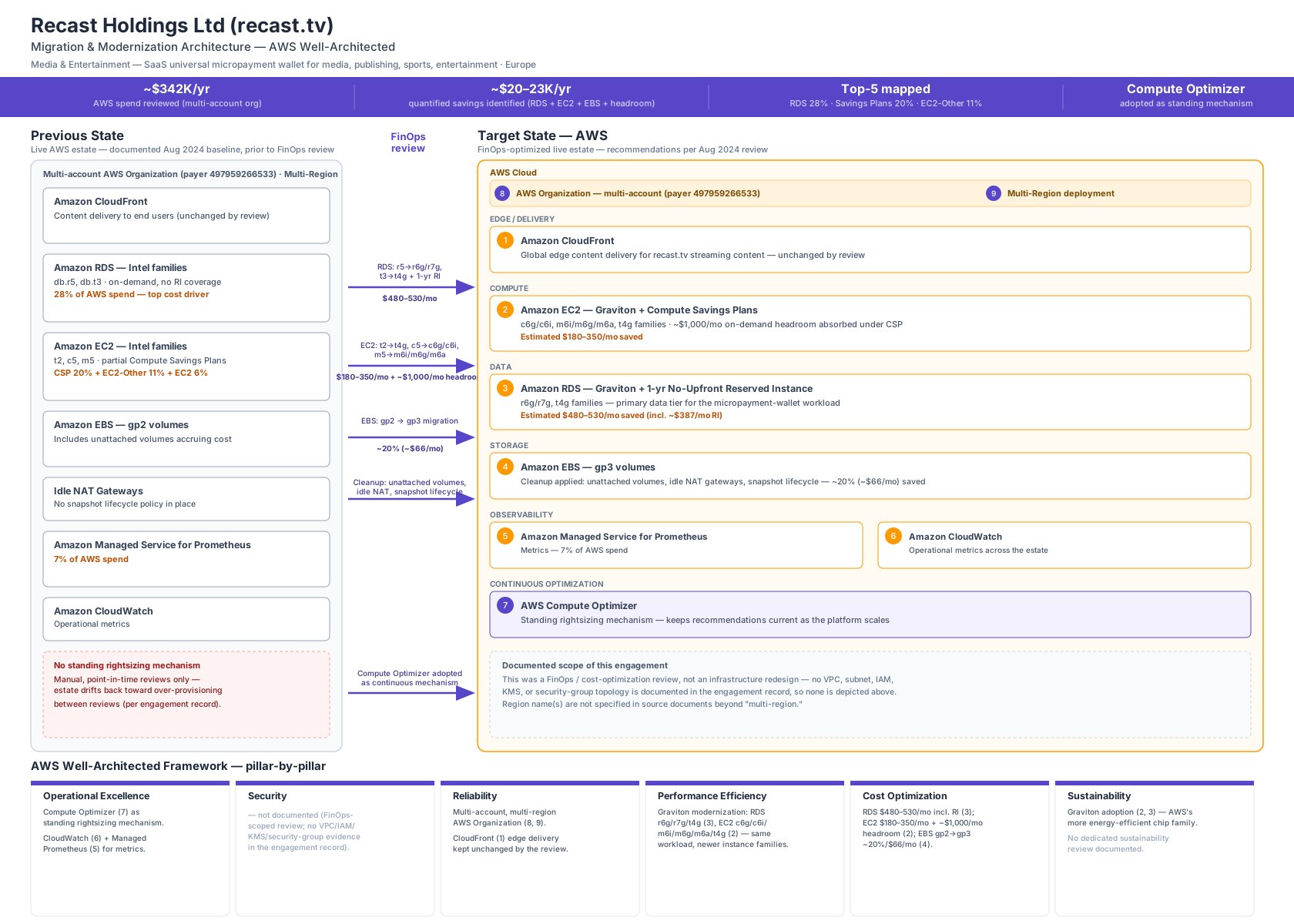
An AWS resell and Ignite engagement with a dedicated FinOps / cost-optimization workstream, producing a documented cost-optimization review against the customer live multi-account AWS organization. The review mapped the cost profile down to the top-five spend drivers — Amazon RDS (28%), Compute Savings Plans (20%), EC2-Other (11%), Amazon Managed Service for Prometheus (7%), and EC2 Instances (6%) — so every recommendation was tied to a real line of spend. Right-sized and modernized the data tier: Amazon RDS onto Graviton generations (db.r5 → r6g/r7g, db.t3 → t4g) plus Reserved-Instance commitment coverage, each with a quantified monthly saving. Modernized compute: newer-generation and Graviton EC2 families (t2 → t4g, c5 → c6g/c6i, m5 → m6i/m6g/m6a) plus on-demand headroom existing Compute Savings Plans could absorb. Optimized storage and network: gp2 → gp3 EBS migration, unattached-volume and idle-NAT-gateway cleanup, snapshot lifecycle policies, and data-transfer optimization. Established an ongoing mechanism: AWS Compute Optimizer as the continuous right-sizing engine.
Production outcomes
| KPI | Result |
|---|---|
| Production outcomes | A full per-service cost profile of the live multi-account organization, with the top-five spend drivers quantified as a percentage of total AWS spend; a quantified RDS savings band of roughly $480–$530/month from right-sizing and a one-year, no-upfront Reserved-Instance commitment (including ~$387/month from the RI commitment alone); an estimated $180–$350/month in EC2 modernization savings plus roughly $1,000/month of on-demand headroom identified under existing Compute Savings Plans; an EBS storage saving of roughly 20% (~$66/month) from the gp2→gp3 migration alongside cleanup and lifecycle recommendations; and a standing cost-optimization mechanism via AWS Compute Optimizer. |
| Engagement window | 2024-08-02 (Resell Customer Live); FinOps recommendations review Aug 2024 → Per-service FinOps review + quantified remediation plan delivered (Aug 2024); AWS Referral auto-renewed 2026-03-31; ongoing |
| Cost / TCO posture | FinOps was the engagement. ~$342K/yr AWS spend (~$28.5K/mo). Quantified recommendations: RDS $480–$530/mo (incl. ~$387/mo RI), EC2 modernization $180–$350/mo, ~$1,000/mo on-demand headroom absorbable under existing Savings Plans, EBS gp2→gp3 ~20% (~$66/mo), plus cleanup and lifecycle savings. AWS Compute Optimizer adopted to keep the discipline continuous. Figures are VeUP's quantified review recommendations/estimates, not independently measured realized savings. |
| Lessons & continuation | Tying every recommendation to a real per-service spend line (top-five drivers as a % of total) is what makes a FinOps review actionable rather than a generic checklist. Adopting AWS Compute Optimizer as the standing right-sizing engine turns a point-in-time review into ongoing financial governance — the savings discipline outlives the engagement. |
Amazon RDS (Graviton + Reserved Instances) · Amazon EC2 + Compute Savings Plans · Amazon EBS (gp2→gp3) · Amazon CloudFront · Amazon Managed Service for Prometheus · Amazon CloudWatch · AWS Compute Optimizer
Architecture
Well-Architected view of the FinOps review — the documented pre-review AWS estate alongside the Graviton-modernized, committed-use-covered target state, with the quantified savings mapped to each component.